10-Minute Daily Reset: Keep Your Home Pristine All Year
"A clean home shouldn't require a lost weekend."
Stop spending your precious Saturdays scrubbing floors and fighting grease. You can maintain a pristine living space in half the time by shifting your philosophy from marathon deep-cleaning to strategic maintenance.
* Micro-Cleaning: Replace massive weekend marathons with 10-minute daily resets. * Chemical Leverage: Let products do the heavy lifting through proper "dwell time." * Zero-Pile Policy: Decluttering is the foundation of cleaning; if there is no clutter, there is nothing to move to wipe.

How to Halve Your Cleaning Time: The Daily Maintenance Mindset
At 7:15 AM on a Tuesday in 2026, you glance at the kitchen counter. There is a ring of dried coffee and a few crumbs from breakfast. In a traditional mindset, you might ignore it until Saturday, or spend twenty minutes scrubbing it later.
In an efficient mindset, you wipe it in ten seconds before leaving for work.
The secret to saving hours is understanding that most "messes" are just accumulated micro-tasks. If you tackle high-touch zones—like kitchen counters or bathroom sinks—immediately after use, the grime never has to bond with the surface. This prevents the need for heavy scrubbing later.
Focusing on these touch points is vital because of what lives on them. For instance, the flu virus can live on a hard surface like a countertop for as long as 48 hours. If you wait until the weekend to wipe down the kitchen, you are living with lingering pathogens for days.
Similarly, certain bacteria like coli and salmonella can live on hard surfaces for up to 4 hours. Addressing spills and crumbs immediately isn't just about aesthetics; it is about hygiene.
Instead of fighting a losing battle against piles of laundry or dirty dishes, focus on the "Load vs. Scrub" balance. Run the dishwasher or the washer to do the mechanical work while you perform other tasks. When the machines are running, your job is simply to manage the flow.
But knowing how to manage the flow is only half the battle; you also need to know how to fight the buildup that refuses to move.
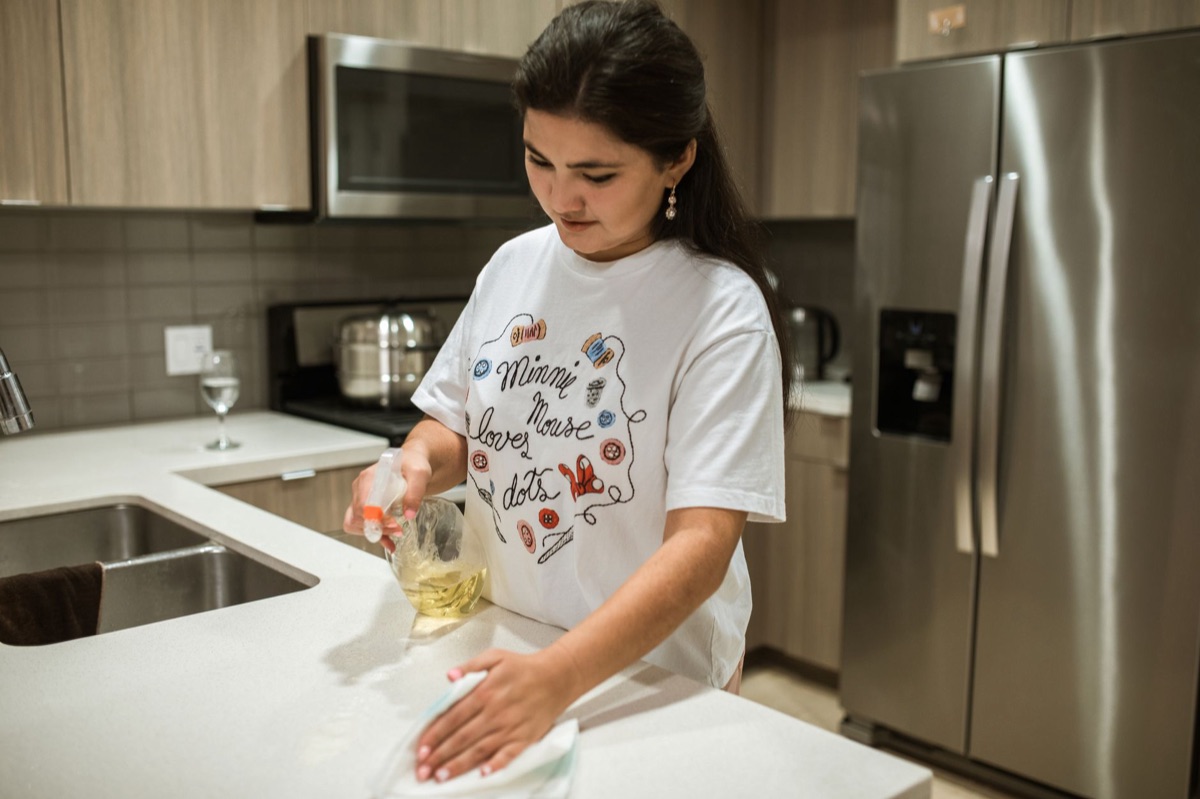
Which tools will make me faster and more effective? You stand in the laundry room on a Thursday afternoon, staring at a bottle of expensive, specialized cleaner that promises to do everything. You realize that most of your cleaning struggles could be solved with much simpler chemistry.
The most effective way to clean is to let the product work for you. This is called "dwell time." When you apply a cleaner to a tough area, do not wipe it off immediately.
Applying a mixture to the area you're cleaning and leaving it on for 3-5 minutes allows the chemical reaction to break down the grime so you don't have to.
For those who want effective results without a cabinet full of chemicals, DIY solutions are incredibly powerful. You can make your own disinfectant by combining 50% water and 50% hydrogen peroxide in a spray bottle. This is a versatile tool for many hard surfaces.
When choosing products, match the tool to the specific problem. Using an acidic cleaner on lime scale is much faster than using a generic soap. If you use the right chemical leverage, you spend less time scrubbing and more time relaxing.
However, even with the right tools, if your house is organized poorly, you will still spend your time fighting the layout rather than the dirt.
How can I clean by area instead of by day? On a Friday evening in 2025, you walk into the living room. The floor is dusty, the guest bathroom needs attention, and the kitchen feels heavy with grease. You feel overwhelmed because you are looking at the whole house at once.
The "Zone Defense" approach breaks the house into manageable sectors. Instead of "Cleaning Day," assign specific tasks to specific zones. In the kitchen, focus on grease removal protocols. In the bathroom, focus on moisture control.
| Zone | Primary Focus | Frequency |
|---|---|---|
| Kitchen | Grease & Food Residue | Daily Reset |
| Bathroom | Moisture & Scale | 2x Weekly |
| Living Areas | Dust & High-Traffic Floors | Weekly |
| Bedrooms | Linens & Decluttering | Weekly |
In the bathroom, the goal is to prevent buildup. In the kitchen, the goal is to prevent organic buildup. By keeping these tasks separate, you prevent the "carry-over" effect where dirt from one room ends up in another.
When I tried this approach last year, I realized that I wasn't actually "dirty"—I was just disorganized. Once I separated the tasks, the house stayed clean with almost no effort on Sunday mornings.
But what happens when the mess isn't just dust, but something that has already taken hold?
Advanced Tactics: Elimining Mess Before It Starts
You reach for your keys on the entryway table, but they land on a pile of unopened mail and a stray jacket. You spend three minutes digging through the pile just to find your keys. This is the "invisible" time thief.
The most effective cleaning routine is one that doesn't require much cleaning. This is achieved through the "One Touch" rule: if you pick an object up, put it where it belongs rather than on a temporary surface. If you touch it once, it is finished.
Scheduled maintenance prevents the "crisis mode" clean. If you move from reactive cleaning (cleaning because it's disgusting) to proactive maintenance (cleaning because it's on the schedule), you eliminate the stress of the mess. Effective storage is also key.
If every item in your home has a specific "home," the surfaces stay clear. When surfaces are clear, wiping them takes seconds rather than minutes.
However, there is a limit to this philosophy. If you live in a space with heavy construction dust or high-density pet hair, no amount of "one-touching" will replace the need for a physical deep clean. In those environments, the rules of maintenance change.
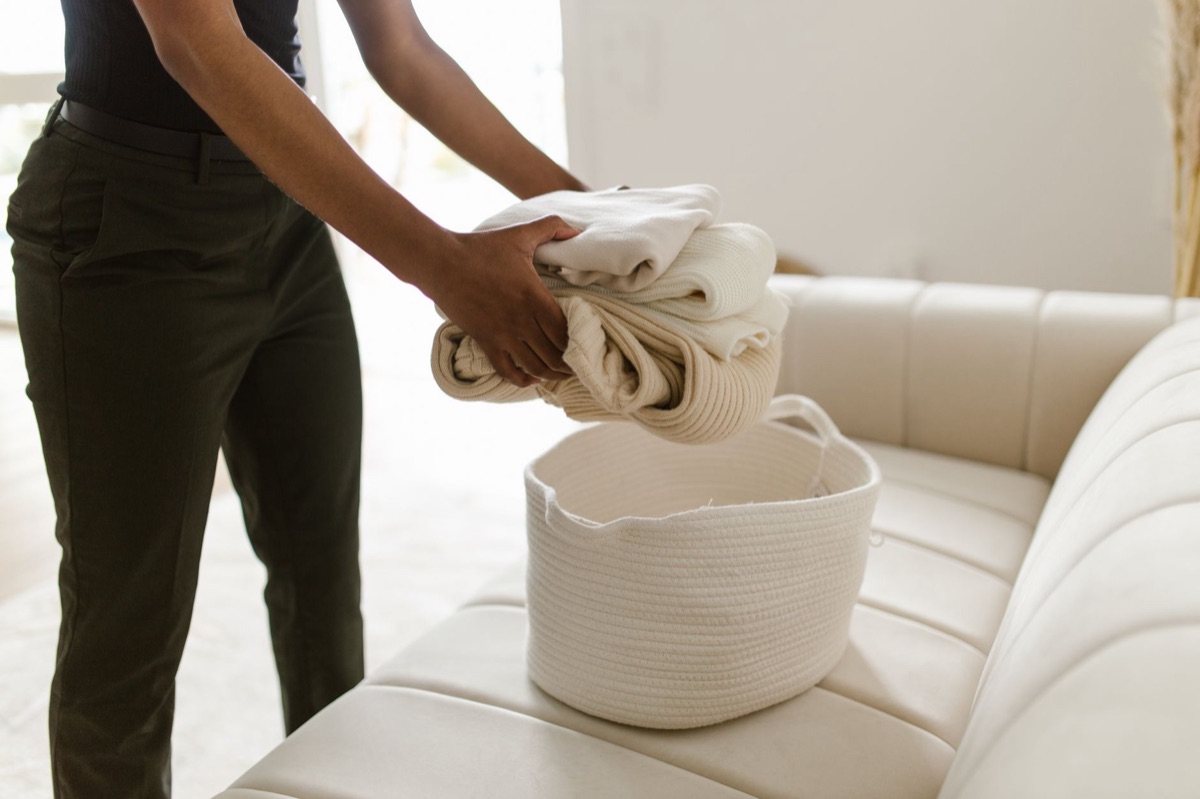
Advanced Problem Solving: Tough Stains & Odors (The Emergency Fix)
You walk into the guest bathroom and catch a whiff of something musty. You realize that the buildup on the shower glass or the vent is starting to become a visible problem.
When dealing with sudden messes, speed is essential. For high-touch hard surfaces, you can mist the area and let it sit for about 5 minutes to allow the disinfectant to work before wiping. This is particularly useful for sudden spills or when you need to sanitize a surface quickly.
For much harder problems, like mold or heavy buildup, you must address the root cause: moisture and airflow. In high-risk areas like bathrooms, ensuring proper ventilation is the difference between a clean shower and a moldy one.
If you encounter an unexpected mess, such as a pet accident or a spilled drink, use the right neutralizing agent immediately to prevent permanent staining or lingering odors.
| Problem Type | Quick Fix Strategy | Long-term Prevention |
|---|---|---|
| Surface Stains | Apply cleaner and let sit (3-5 mins) | Regular wipe-down routines |
| Odors | Neutralize with specific products | Improve airflow/ventilation |
| Biological Mess | Immediate disinfection | Regular deep-clean scheduling |
FAQ
집안일을 줄이려면 어떤 접근 방식을 취해야 하나요?
청소를 미루지 않고 바로 해야 하는 중요한 이유가 있나요?
청소 효율을 높이는 데 도움이 되는 습관은 무엇인가요?
Related posts
Cleaning Strategy: Slash Your Spring Cleaning Time by 50%
Seasonal Closet Organization: 3 Pro Steps to Maximize Space
Plastic Science: Choose Tools Built for Tough Cleaning Jobs
Dust Control Tips: Keep Air Purifiers 20 Inches From Walls
Popular posts
Cleaning Strategy: Slash Your Spring Cleaning Time by 50%
Dust Control Tips: Keep Air Purifiers 20 Inches From Walls
Kitchen Grease Removal: 3 Natural Tools for Fast Results
Comments 0