Biological filtration guide: How to manage water systems
"The natural way to clean is often the most sustainable way to maintain our environment."
Natural cleaning involves using biological or simple physical processes to manage waste and maintain hygiene without synthetic chemicals.
This guide explores how natural filtration and recycling-inspired logic can assist in managing environments, though it is important to note that effectiveness depends heavily on the specific type of contaminant being addressed.

* Understand the role of biological filtration in water systems. * Learn how to manage water through natural processes. * Explore the connection between recycling and waste reduction. * Identify the limitations of natural cleaning versus industrial solutions.
How can biological systems manage water cleanliness?
At sunset, I knelt by the murky pond and felt the damp soil soak through my jeans while watching the biological filtration process at work.
A person stands by a quiet pond, watching how the clear water moves through thick green reeds. In natural pool systems, plants used in a filtration area can create a low-cost maintenance system. These plants are often planted hydroponically, placed no deeper than 30 cm, to help manage water quality.
The biological process relies on the interaction between plants and water to process nutrients. This method mimics how nature handles waste in larger bodies of water. By using these living filters, the need for chemical additives is reduced.
The plants in a filtration area serve as a living sponge for the water. This setup is particularly useful for maintaining large volumes of water without constant chemical intervention.
- Microorganisms break down organic matter.
- Plants absorb excess nutrients through their roots.
- Natural filtration occurs through soil layers.
What are the differences in water volume and recycling?
Standing before the massive reservoir at noon, I shivered from the cold mist as I contemplated the scale of the recycling loop and its biological impact.
A technician monitors a large-scale water system, noting the massive scale of the containment. For example, the Minneapolis pool can hold up to 500,000 gallons of water, which is recycled every 12 hours. Comparing different scales shows how much volume a natural or semi-natural system can manage.
| Feature | Scale Example | Frequency |
|---|---|---|
| Minneapolis Pool | 500,000 gallons | Every 12 hours |
Managing such large volumes requires efficient movement to prevent stagnation. The ability to cycle water quickly is vital for maintaining health in any large-scale aquatic environment.
I once looked at these massive volume figures and wondered how such a large amount of water could be moved so efficiently without losing clarity.
In this sequence, the second step is the longest.
How does the earth's water distribution affect our view of resources?
A researcher examines a map of the world, tracing the vast blue expanses of the oceans. Understanding the scale of our planet helps put water management into perspective. Approximately 71% of the Earth's surface is covered by salt-water oceans.
The distribution of water on Earth is highly uneven. While the oceans hold 96.5% of surface water, other sources like glaciers and polar ice caps make up 2.4%. The remaining land surface water, including rivers, lakes, and underground aquifers, accounts for 1%.

Recognizing these proportions helps in understanding the scarcity of usable freshwater. Most of the planet's water is saltwater, making the management of freshwater-specific systems even more critical.
What role do guidelines play in natural water structures?
An architect reviews a set of technical drawings for a new outdoor project.
While no regulation yet exists for the construction and maintenance of natural swimming pools, the International Organization for Natural Bathing Waters (IOB) was established in Germany in 2009 to set guidelines for the building and maintenance of such structures.
Standardized guidelines help ensure that natural systems remain safe and functional. Even without universal regulation, organizations like the IOB work to provide a framework for builders. These guidelines help balance the desire for natural aesthetics with the necessity of hygiene.
Establishing these standards is a way to professionalize natural water management. Without them, the maintenance of such structures might become unpredictable for users.
How can we apply recycling principles to cleaning?
A person gathers empty glass bottles to prepare them for a refillable system. In some regions, history shows that organized recycling can lead to incredible efficiency.
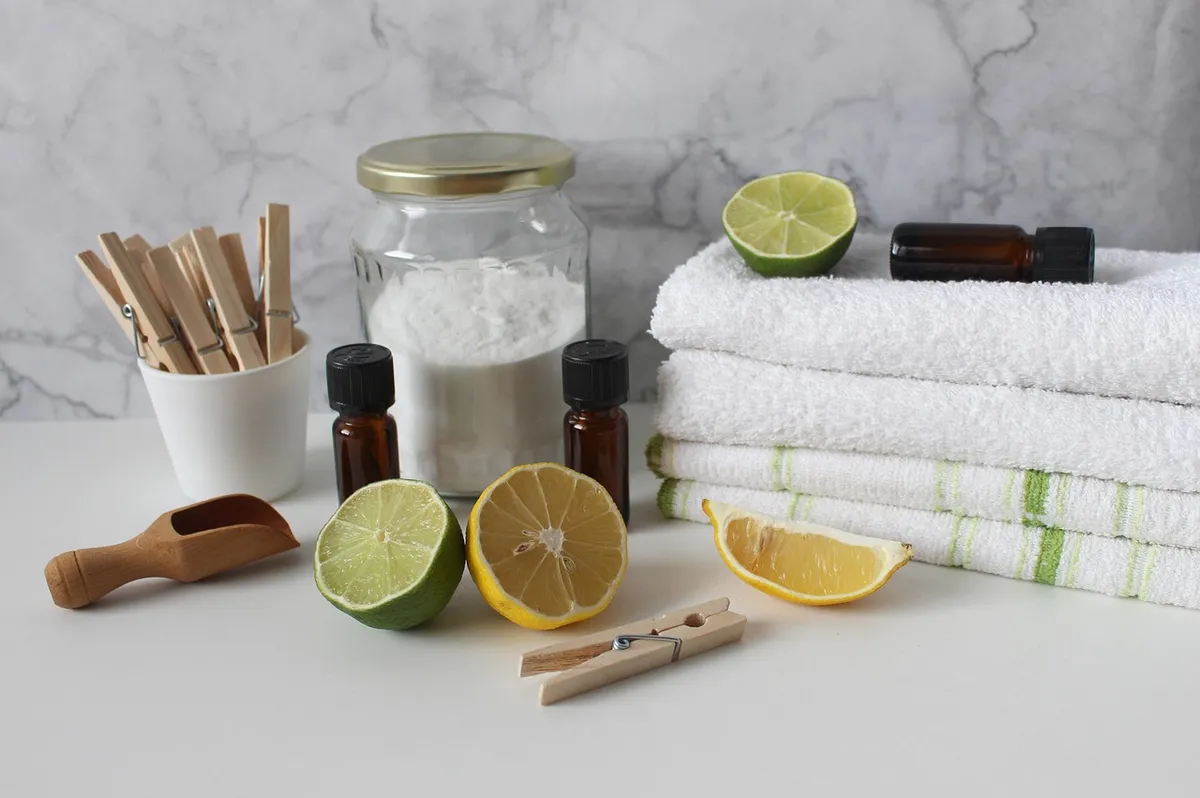
An official recycling system with refundable deposits for bottles was established in Sweden in 1884, and for aluminum beverage cans in 1982; it led to recycling rates of 84–99%, depending on type.
Applying the concept of "reuse" to cleaning can reduce waste. For example, reusing containers or utilizing materials that can be easily cleaned and returned to a cycle is a core tenal of sustainable living.
- Identify reusable containers for natural cleaning solutions. 2. Use biodegradable materials that do not leave permanent residues. 3. Check that the material being cleaned can withstand natural scrubbing methods.
A limitation of these methods is that they may not be effective against heavy industrial contaminants or highly toxic substances.
Related
How does the condition of contaminants affect natural clean methods? Natural clean methods face specific limitations when dealing with certain substances. The effectiveness of natural filtration is contingent upon the specific type of contaminant present in the environment. For instance, the process may falter when addressing highly toxic substances or heavy industrial contaminants. This condition requires careful assessment before implementing a natural clean strategy.
The biological process relies on the interaction between plants and water to process nutrients, which suggests a certain scope for what the system can handle. This reliance on natural processes implies a difference in capability when compared to industrial solutions designed for extreme waste.
Therefore, understanding the contaminant is a prerequisite for successful natural clean application.
What are the necessary steps for applying recycling to natural clean practices? Applying recycling principles to achieve a natural clean environment involves a sequence of thoughtful actions. First, one must identify reusable containers suitable for holding natural clean solutions. Second, it is important to utilize biodegradable materials that avoid leaving permanent residues in the system. Third, a check must confirm that the material requiring cleaning can endure the natural scrubbing methods employed.
These steps build upon the concept of reuse, which is central to sustainable living practices. By following this procedure, the waste generated during cleaning can be significantly reduced. This approach aligns with the goal of maintaining an environment through simple, regenerative processes.
Wikipedia: Natural swimming pool Based on the retained excerpt mentioning International Organization: While no regulation yet exists for the construction and maintenance of natural swimming pools, the International Organization for Natural Bathing Waters (IOB) was established in Germany in 2009 to set guidelines for the building and maintenance of such structures.



Comments 0