Quick clean tips for a 5 minute quick clean routine
A successful 5 minute quick clean requires focusing only on visible clutter and high-traffic surfaces to reset a room's appearance. This routine works best for those needing a fast home tidy up before guests arrive or after a long workday.
Key takeaways: * Prioritize surface clearing over deep scrubbing. * Use a timer to maintain momentum. * Focus on one specific room at a time to avoid wandering.
How can I manage a 5 minute quick clean?

I grab the stray mugs from the coffee table at noon, moving with a quick motion to clear the clutter while the warm sun hits my face.
I stand in the center of a living room, timer in hand, looking at the scattered pillows and stray coffee mugs. To execute an effective 5 minute quick clean, one must ignore deep dirt and focus entirely on surface-level organization.
This rapid interior clean is about resetting the visual environment rather than performing a deep scrub.
A fast home tidy up involves moving quickly through a single space to restore order. Instead of cleaning every corner, you address the items that break the visual flow of the room. This approach ensures the space looks lived-in but managed, providing an immediate sense of relief.
The goal is to achieve a 5 min room reset by addressing only the most obvious disruptions. By concentrating on the immediate visual field, you prevent the task from expanding into a multi-hour ordeal. This method keeps the momentum high and the frustration low.
To manage a five-minute clean, focus entirely on high-impact visual areas and avoid the temptation to deep clean or organize drawers.
What are the steps for a 5 min room reset?
A hand reaches for a microfiber cloth, wiping a single streak off a wooden table before moving to the next task. To perform a successful 5 min room reset, follow these three distinct actions to transform your space quickly:

- Clear flat surfaces by gathering loose items into a single container or designated spot. 2. Straighten soft goods like pillows, blankets, or chair cushions to create clean lines. 3. Remove trash or dirty dishes from the room to eliminate the most noticeable clutter.
I found that checking the floor for large debris after these steps prevents the room from looking neglected. This quick home organization tips strategy relies on the "one-touch" rule, where you move an object to its proper place rather than just moving it around.
A speedy room tidying guide should always end with a final sweep of the eyes. Look at the room from the doorway to see if any major visual clutter remains. If the main surfaces are clear and the floor is visible, the mission is complete.
- Clear all flat surfaces of clutter.
- Return misplaced items to their designated homes.
- Straighten pillows, blankets, or chairs to restore the room's shape.
Can this routine work for every room?
I stand in the doorway of the kitchen at dusk, making a quick glance around the room as the smell of jasmine drifts in.
The sun hits the kitchen counter, highlighting a thin layer of dust that seems to multiply in the light. While this routine works for living areas, applying it to a kitchen or bathroom requires a slightly different focus.
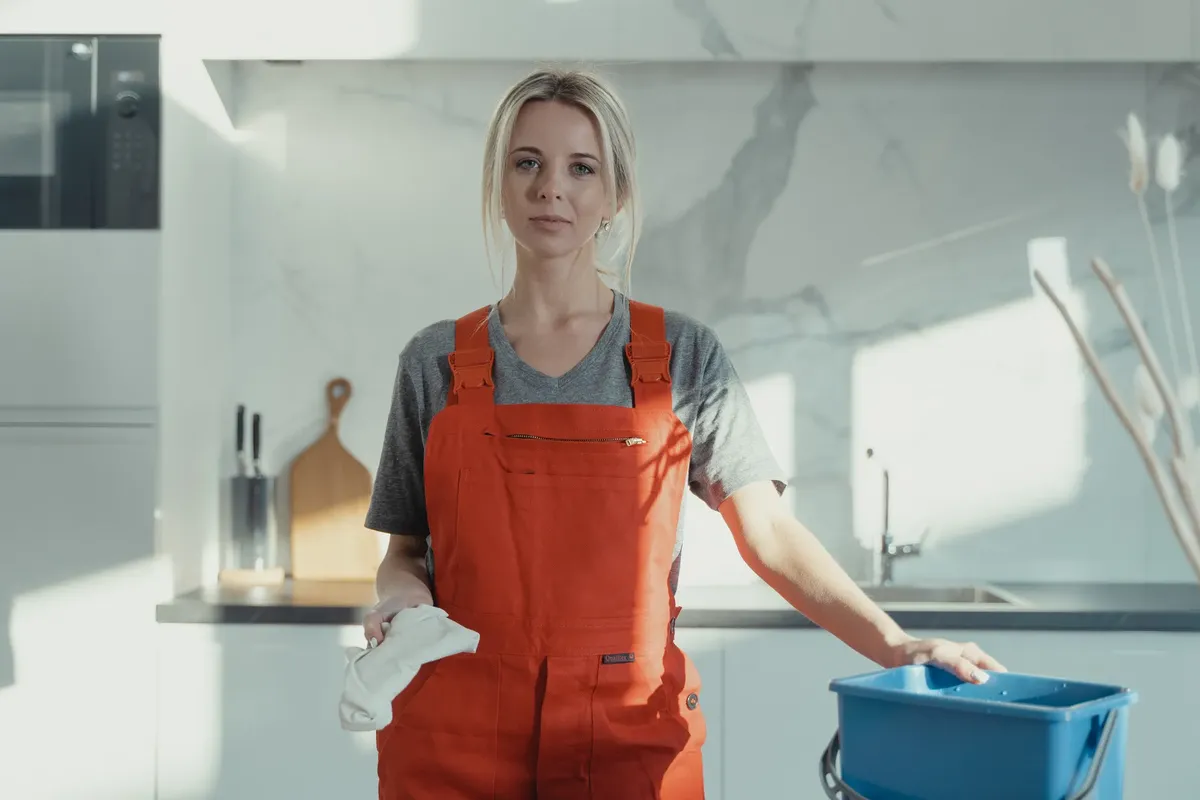
A quick inside clean in a kitchen focuses on clearing counters, whereas a bathroom reset focuses on towel alignment and vanity clearing.
A 5 minute quick clean is not a substitute for deep cleaning or sanitation. It is a maintenance tool designed to manage daily chaos. If a surface is heavily stained or a floor is deeply soiled, this routine will not resolve those issues.
| Task Type | Focus Area | Result | | :---assumed| :---assumed| :---assumed| | Visual Reset | Surfaces and Pillows | Immediate tidiness | | Sanitation | Dust and Dirt | Deep cleanliness |
The limitation of this method is that it does not address underlying grime or hidden dirt. It is strictly a tool for visual management and immediate organization.
Yes, this routine is versatile enough for any living space, provided you focus on surface-level tidiness rather than deep scrubbing.
How to apply this to a messy workspace?
A hand picks up a stray pen and places it into a desk organizer, clearing a small patch of wood. When applying an easy 5 minute cleaning routine to a workspace, the focus shifts to clearing the desk surface. You must clear the path for your productivity by removing non-essential items.
- Gather all loose papers and stack them neatly or place them in a designated tray. 2. Return all writing utensils and small electronics to their specific drawers or holders. 3. Wipe the desk surface with a dry cloth to remove surface dust.
I once tried to organize my entire filing cabinet during a timed session, which quickly turned into a much longer task. To maintain the 5 minute limit, do not open drawers or organize contents; simply clear the top surface.
Always end with a quick check of your chair position. A tucked-in chair makes a workspace look instantly more professional and organized.
Apply the method by gathering loose papers, disposing of trash, and aligning your keyboard and mouse to create an immediate sense of order.
Related
- Bathroom cleaning order guide: top-to-bottom approach tips
- Master Room Cleaning and Clear Storage for Peak Efficiency
How does the focus shift when cleaning different areas?
The focus shifts based on the room's primary function, even within a successful 5 minute quick clean. For a living area, the priority involves aligning pillows and removing stray objects from tables.
Conversely, in a bathroom, the attention centers on ensuring towels are properly placed and the vanity area is clear of immediate mess. The kitchen demands that counters be cleared of items that break the visual line, though it still avoids deep scrubbing.
This selective focus allows the routine to adapt to various environments while retaining its core purpose of visual management. The principle remains the same: address the most visible disruptions to achieve an immediate sense of order.
When applying this to a workspace, the procedure emphasizes clearing the horizontal surfaces to enable productivity. This contrasts with the living room's focus on aesthetic arrangement, although both aim for a tidier appearance within the successful 5 minute timeframe.
The focus shifts from clearing surfaces in living areas to managing small items and clutter in more personal or functional spaces.
What cautions should I keep in mind during a successful 5 minute quick clean?
One caution involves resisting the urge to start a deep clean when the timer is running. Because the routine prioritizes surface clearing, attempting to scrub a stained surface will immediately derail the goal of a successful 5 minute quick clean.
Another caution is to avoid organizing items that are not immediately visible, as this distracts from the visual reset objective.
When performing a successful 5 minute quick clean, remember that the process is about perception management, not deep sanitation. If you find yourself lingering on a single item, recognize that this violates the principle of rapid interior clean.
The routine demands quick movement through the space to maintain momentum.
Avoid the trap of starting a task that takes longer than five minutes, such as organizing a closet or scrubbing a floor, as this will derail your schedule.
How does the successful 5 minute quick clean differ from daily maintenance?
Daily maintenance might involve addressing small spills as they happen, whereas the successful 5 minute quick clean is a targeted reset for appearance. The quick clean addresses items that break the visual flow, which might be larger than a typical daily spill.
This routine serves as a maintenance tool designed to manage daily chaos, providing a quick visual lift.
For a successful 5 minute quick clean, the comparison to deep cleaning is stark; one fixes the appearance, while the other addresses underlying grime. The quick clean is strictly a tool for visual management and immediate organization, not a replacement for thorough cleaning.
FAQ
Is a 5 minute quick clean enough for guests?
What is the main limitation of this routine?
Related posts
Bathroom cleaning order guide: top-to-bottom approach tips
Master Room Cleaning and Clear Storage for Peak Efficiency

12,000 miles guide: Maintaining a clean car interior

Comments 0